Why the top comes up before the cabinets are drawn
A countertop looks like the last thing in a kitchen, and that is where most of the trouble starts. The thickness of the top, the depth of the overhang and the weight it puts on the base cabinets all change how those cabinets are built. A stone top on a long island needs the base to carry it, and an overhang meant for stools needs support underneath, not just a hopeful bracket. An island sized for the room rather than for the slab leaves a walkway too tight to open a dishwasher, and no top fixes that after the fact.
Seams are the other thing that goes wrong. A slab only comes so long, so the length of a run decides where a joint falls, and a joint that lands across the sink or the cooktop is one nobody wants to live with. Sink and range cutouts, the faucet holes and the position of the dishwasher all belong in the plan before anything is cut.
Butcher block adds a different question. Wood moves with the seasons, so a block top needs room to swell and shrink and a fixing method that allows it. These are decisions for the drawing stage, which is why tops are specified together with the cabinets and not picked afterwards from a brochure.
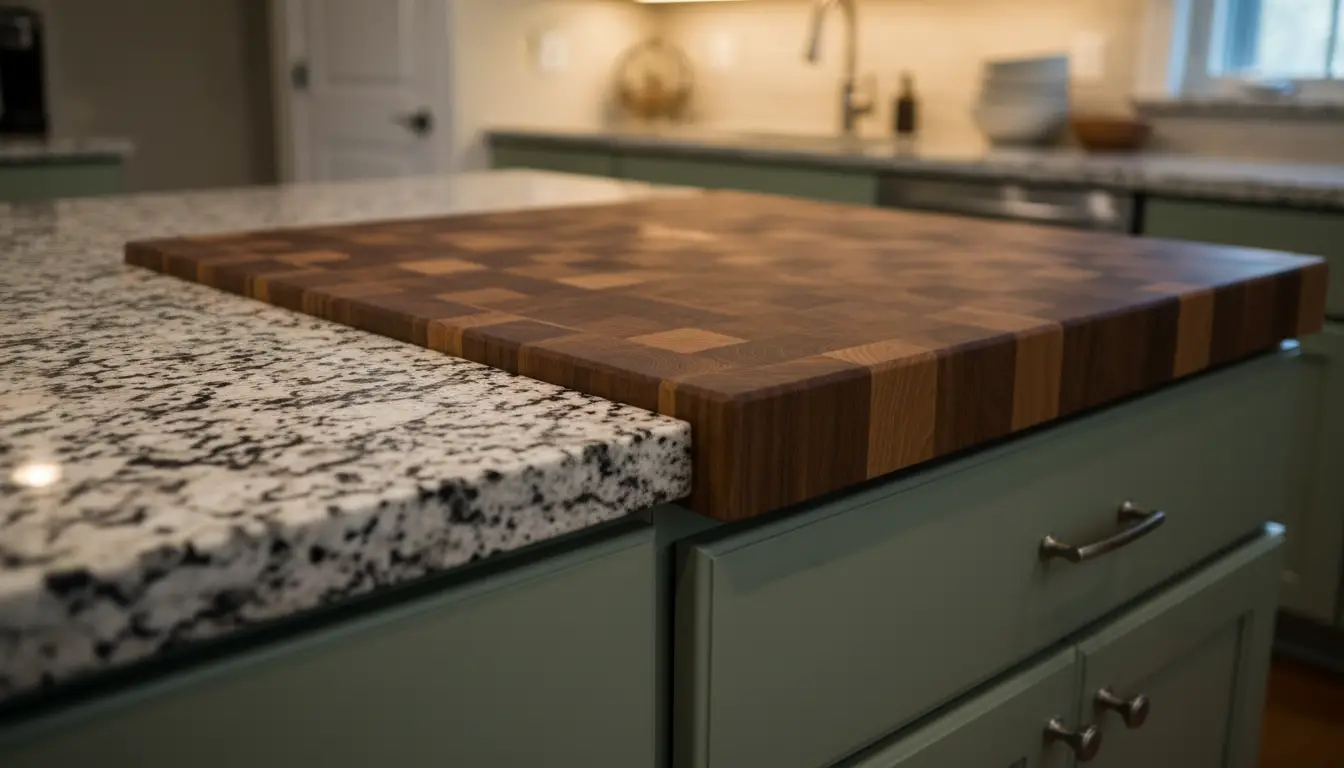
Granite beside butcher block, both in the showroom
The display kitchen at the showroom on Carl Vinson Parkway in Warner Robins puts two tops side by side. The distressed painted island carries a granite top, and a butcher-block bar overhang runs off the end of it. Standing at that island is a better way to choose than any small sample, because you can see how the stone looks under the shop lighting, how the grain of the block sits against the painted legs, and how the two tops meet.
Granite reads cool, hard and still. Butcher block reads warm, forgiving and slightly different from one board to the next. Some kitchens want one of them everywhere, and some use both: stone where the cooking and cleanup happen, wood where people lean and prep. Granite also carries the room's color: a speckled stone next to a warm stained door looks very different from the same stone beside a painted one. Each choice changes how the cabinet doors and finish look next to it, so the top, the door style and the paint or stain get weighed in one conversation.
The top is part of the same order as the kitchen it sits on, so the person who draws your cabinets is the person you talk to about the stone or the block.
Sealing granite, oiling butcher block
Granite is tougher than it looks, but it is porous, and a sealer is what keeps oil, wine and lemon juice from darkening it. A simple test tells you when to reseal: put a few drops of water on the surface. If they bead, the seal is working. If the stone darkens and the water soaks in, it is time to seal again. Wipe spills promptly, use a stone-safe cleaner instead of vinegar or harsh acids, and use a board for cutting, which keeps your knives sharp.
Butcher block wants oil, not sealer. A food-safe mineral oil, worked in when the wood looks dry or pale, keeps the surface from drying out and cracking. Keep standing water off it, especially around the sink, and wipe up wet cups and bowls before they leave a ring. A block that is oiled when it asks for it will darken and deepen over the years instead of splitting. Neither top asks for much, only that you pay attention to it a few times a year, and the habits above are the whole routine.
Bring a photo of your kitchen or a few measurements and ask which top suits the room. Call (478) 923-5400 for a time to see both tops in the showroom.